
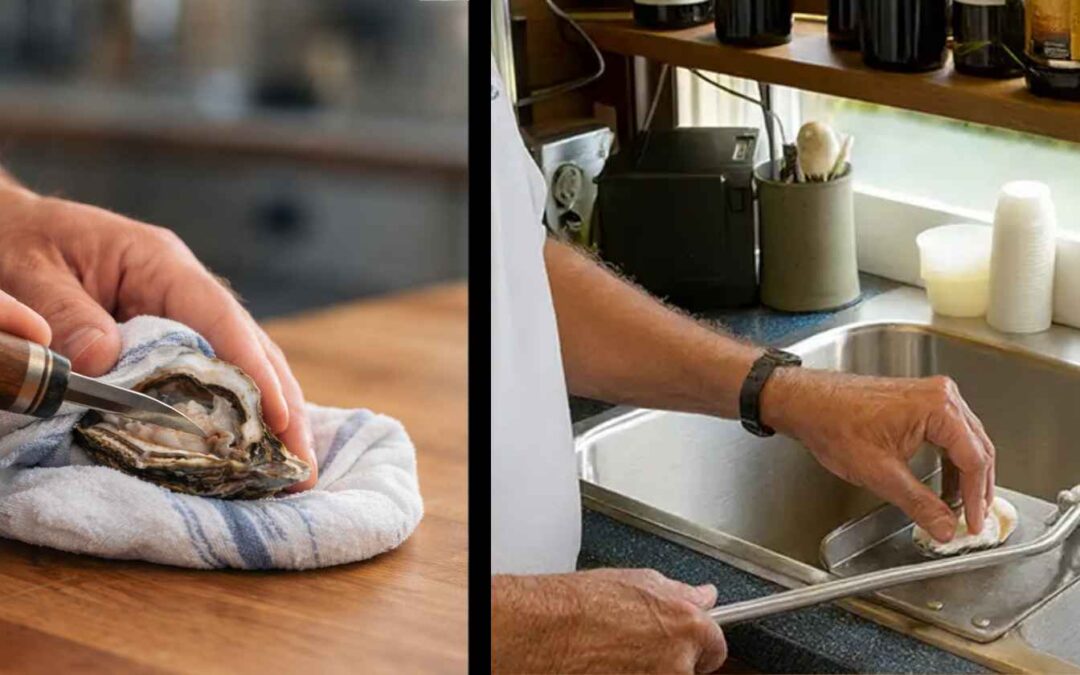
If you’ve got oysters in the fridge and guests coming over, this question tends to show up fast: Do I just grab a knife… or is one of those mechanical shuckers actually worth it?
For years, the oyster knife has been the standard. It’s traditional. Compact. Inexpensive. If you picture someone shucking oysters on a dock, there’s a knife in their hand. But in recent years, mechanical oyster shuckers have made their way into home kitchens — especially for people who want more control and less risk.
So which one actually makes more sense? Let’s talk it through.
Oyster Shucker vs Oyster Knife:
Which Is Safer. Which Is Faster?
If you’ve got oysters in the fridge and guests coming over, this question shows up fast: Do I just grab a knife… or is one of those mechanical oyster shuckers actually worth it?
For years, the oyster knife has been the standard. It’s traditional. Compact. Inexpensive. If you picture someone shucking oysters on a dock, there’s usually a knife in their hand. But in recent years, mechanical oyster shuckers have made their way into home kitchens — especially for people who want more control, more consistency, and less risk.
So which one actually makes more sense? Let’s break it down clearly.
The Oyster Knife: Simple, Traditional — and Skill-Based
An oyster knife is straightforward. Short blade. Thick handle. You work the tip into the hinge, twist, and pop the shell open. In experienced hands, it can be quick and efficient. It even looks impressive. But here’s what doesn’t get talked about enough: it’s a technique, not just a tool.
You’re applying pressure. Twisting. Leveraging the hinge open while holding a rough, uneven shell in your other hand. If it resists — and sometimes they do — the force increases. That’s where slips happen.
Most home cooks use a towel or protective glove for good reason. The blade moves toward your holding hand. Even careful people get surprised by a stubborn oyster — especially after a drink or two.
If you’re opening a dozen oysters once or twice a year, you may never feel fully comfortable with that motion.
The Oyster Shucker: Controlled Pressure, Less Guesswork
A mechanical oyster shucker changes the dynamic.
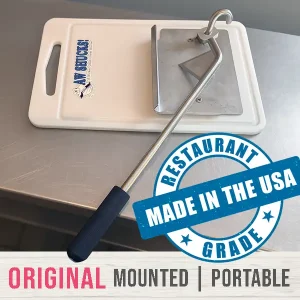
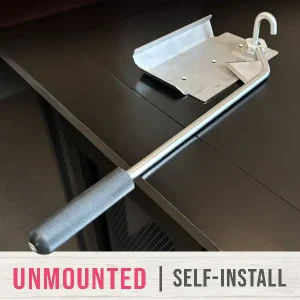
A mechanical oyster shucker changes the entire dynamic. Instead of forcing a blade into the hinge while stabilizing the shell with your hand, the oyster is secured in place. Pressure is applied in a controlled, even way. There’s less twisting. Less strain. Less improvising.
For someone hosting an oyster night at home — especially with guests watching — that difference matters more than you might expect. You’re not wrestling with the shell. You’re operating a system.
And when you’re opening two or three dozen oysters for a dinner party, that calm adds up.
Let’s Talk Safety
If safety is the deciding factor for you, here’s the real difference:
If safety is your deciding factor, here’s the practical difference.
With an oyster knife:
- One hand holds the oyster.
- The other hand pushes and twists.
- If the blade slips, it often travels toward the holding hand.
That doesn’t mean oyster knives are inherently unsafe. Professionals use them every day. But the margin for error is smaller — especially for beginners.
With a mechanical oyster shucker:
- The oyster is secured.
- Hands are not positioned in the path of force.
- Pressure is directed and controlled.
For occasional home use, that added stability can make the experience significantly more comfortable.
What About Speed?
Speed depends heavily on experience.
A restaurant worker who opens oysters daily can move quickly with a knife. But most home hosts aren’t doing that.
For beginners, the first few oysters with a knife often feel slow and awkward. You adjust your grip. You hesitate. You second-guess the angle. With a mechanical oyster shucker, the motion is repeatable from the start. The learning curve is shorter. And when fatigue sets in — especially over multiple dozen oysters — tools that reduce strain often end up being faster overall.
The Price Question
An oyster knife costs less upfront. A mechanical oyster shucker costs more.
An oyster knife is inexpensive. A mechanical oyster shucker costs more upfront. But the real comparison isn’t just price — it’s use case.
If you open oysters once a year, a knife may be perfectly adequate. If you host regularly, run events, sell seafood, or simply value consistency and reduced risk, durability starts to matter more than the initial cost. Professional-grade stainless steel shuckers are built for repetition. They’re tools designed to perform the same way every time.
And predictability has value.
Final Thought: Which One Should You Choose?
Choose an oyster knife if:
- You enjoy mastering traditional technique
- You open small quantities
- You’re comfortable managing leverage and blade control
Choose a mechanical oyster shucker if:
- You want maximum stability
- You host often
- You’re opening multiple dozen oysters
- You prefer predictable, controlled results
There isn’t one universal answer. But there is a right answer for your kitchen.
And if your goal is to host confidently — without tense moments at the counter — the tool that offers more control usually wins.
Related articles
- What to Get the Man Who Has Everything
- The Safest Way to Shuck Oysters at Home
- Valentine’s Day Gift Ideas for Men Who Love Food
- Hosting an Oyster Night at Home: A Simple Guide