

If you’ve ever stood at your kitchen counter trying to open oysters, you’ve probably wondered why oysters are so hard to open in the first place. You get the knife in place, apply a little pressure… nothing. You adjust. Push harder. Still nothing. Then suddenly it slips, and now you’re more focused on your hand than the oyster.
If you’ve ever wondered why oysters are hard to open, you’re not alone: Why is this so difficult?
It’s a fair question — and the answer has nothing to do with you.
Oysters Are Built to Stay Closed
Oysters aren’t delicate. They’re designed to survive in rough, unpredictable environments, which means their shells are meant to stay tightly sealed under pressure. The reason why oysters are hard to open is because the hinge is particularly strong — far stronger than most people expect the first time they try to open one.
On top of that, every oyster is a little different. Some are flat, some are deep, some have clean hinges, others don’t. So even if you get one open easily, the next one can feel completely different. That inconsistency is what throws people off more than anything.
You’re not learning one motion — you’re constantly adjusting.
Why Oysters Are So Hard to Open at Home
The traditional knife method works, but it’s built on repetition. People who are good at it have opened hundreds, sometimes thousands of oysters. They’ve felt every variation and know how to adjust without thinking about it. At home, it’s a different story.
You’re holding a rough, uneven shell in one hand, trying to find the hinge with the other, applying pressure at just the right angle — and hoping it gives before something slips. If it resists, you push a little harder. If that doesn’t work, you shift your grip and try again.
And if we’re being honest, this usually isn’t happening in a quiet, focused environment. You’ve got people over. Maybe a drink in hand. The pace is casual — but the task isn’t. That’s where the tension comes from. Not just physical, but mental.
What Makes Oysters Easier to Open
Once you step back from the technique for a second, the pattern becomes pretty clear.
Oysters are easier to open when three things are working in your favor:
- The oyster isn’t moving
- The pressure is controlled and directed
- The motion is repeatable
When those three things are in place, the experience changes. You’re not reacting to each oyster — you’re working through them.
Stop Fighting the Oyster — Change the Setup
Most people approach oysters like a challenge to overcome. You grip tighter, push harder, try to “win” against the shell. But the people who make it look easy aren’t fighting anything. They’ve removed the variables.
Instead of: “This one’s being a pain…”
It becomes: “Give me a second.”
There’s a calm to it. A rhythm. And that’s not about skill alone — it’s about setup.
A Better Way to Open Oysters at Home
If you’re opening a dozen oysters once or twice a year, you can absolutely get by with a knife. Take your time, use a towel, and you’ll likely be fine. But if oysters are something you enjoy more regularly — or you like having people over — the process starts to matter more. Not just whether you can open them, but whether it feels smooth, controlled, and repeatable.
That’s where tools designed for consistency start to make sense.
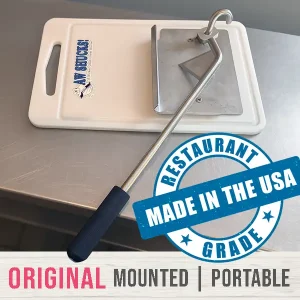
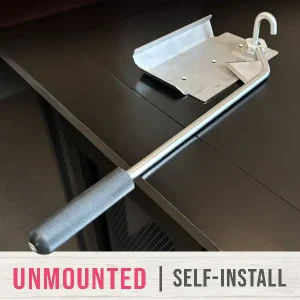
A mechanical oyster shucker changes the dynamic in a pretty simple way. The oyster is held in place. The pressure is applied in a controlled direction. You’re not guessing at angles or adjusting your grip every time. And because of that, everything settles down. The process becomes more predictable. Less strain. Less second-guessing.
Final Thought: Why the Right Setup Makes All the Difference
Oysters are hard to open because they’re supposed to be. Strong hinge, irregular shape, constant variation — it’s built into the shell. And when you combine that with a method that relies on precision, grip, and timing, it’s easy to see why things get frustrating quickly at home.
So if we step back and look at what actually makes oysters easier — stability, controlled pressure, and repeatability — the path forward becomes pretty obvious. That’s why many home cooks eventually move toward a mechanical oyster shucker — not because they can’t use a knife, but because the process becomes more controlled and consistent.
You can keep working against the shell… or you can change the setup so it works with you. That’s the difference most people feel immediately. And once you feel it, it’s hard to go back.
Related articles
- Oyster Shucker vs Oyster Knife: Which Is Safer and Faster?
- What to Get the Man Who Has Everything
- The Safest Way to Shuck Oysters at Home
- How Restaurants Shuck Oysters Safely — And What Home Cooks Can Learn
- Hosting an Oyster Night at Home: A Simple Guide