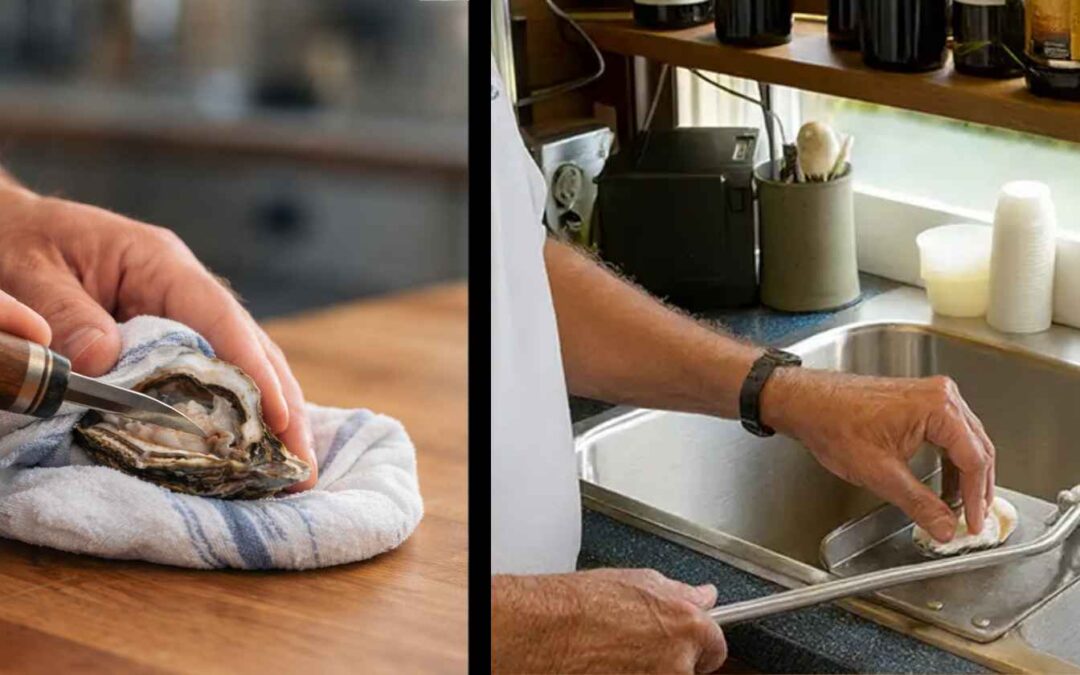
You’ve open hundreds of oysters. And people often ask you how to open oysters without cutting yourself… but there’s always a few that give you pause.
You’ve got a dozen oysters on the counter, a towel in one hand, a knife in the other, and you’re staring at that hinge like it owes you something. You push a little. Nothing. Adjust your grip. Try again. Still nothing. Then it slips just enough to remind you that this isn’t a game you want to lose.
If that feels familiar, you’re in good company. Most people don’t struggle with oysters because they’re careless. They struggle because the process includes unique oysters – some seemingly impossible, and it only takes one stubborn shell to turn confidence into hesitation.
Why Opening Oysters Goes Wrong at Home
Oysters are built to stay closed. That hinge is strong for a reason, and every shell has its own shape, its own quirks. One opens clean, the next fights you the whole way. So you adjust. You push a little harder. That’s where things start to go wrong. The problem isn’t the idea of using a knife. It’s what happens when force replaces control.
Where the Risk Actually Comes From
When you’re holding the oyster in your hand and driving a blade toward the hinge, everything depends on stability. If the shell shifts even slightly, your angle changes. If your angle changes, the knife doesn’t go where you expect it to. Add a little resistance, a little impatience, maybe a drink or two into the mix, and now you’re working against the shell instead of with it.
That’s how people get cut. Not because they don’t know what they’re doing, but because they’re compensating in real time for something that keeps changing.
Removing unpredictable variables decreases the chances of hurting yourself while opening oysters
The folks who make it look easy aren’t guessing. They’ve either done it thousands of times, or they’ve removed the variables that cause the problem in the first place. The oyster stays put. The pressure goes where it’s supposed to. The motion doesn’t change from one shell to the next.
That’s the difference.
If you want to keep things simple and safe at home, it comes down to a few non-negotiables. The oyster has to be secure. Your hands should never be in the path of the blade. And whatever pressure you apply needs to be controlled, not forced. Once those pieces are in place, the whole process slows down in a good way. You’re not reacting anymore. Your breathing is steady and you’re confident.
Some people stick with the knife and learn that feel over time, and there’s nothing wrong with that. But if you’ve ever found yourself hesitating mid-shuck, or adjusting your grip more than you’d like, it’s worth questioning your setup.
 A More Controlled Way to Open Oysters
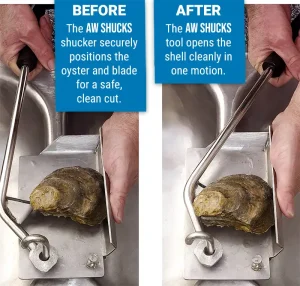
A more controlled approach changes the tone entirely. When the oyster is held in place and the pressure is directed where it needs to go, you’re not fighting anything. You’re just opening oysters. One after the next, same motion, same result. No surprises.
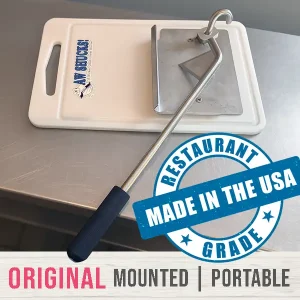
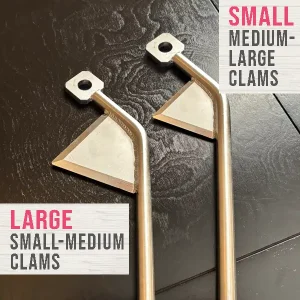
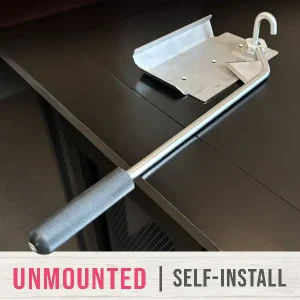
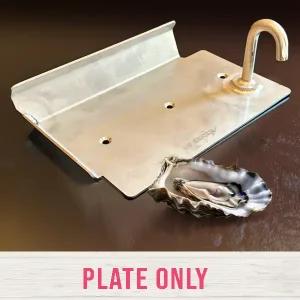
That’s where tools like the Aw Shucks oyster shucker find their place. Not as a replacement for tradition, but as a way to make the process consistent. You’re not lining up a blade and hoping it lands right. You’re working through a system that keeps everything where it belongs. For a lot of people, that’s the difference between a tense moment at the counter and something you actually enjoy doing.
At the end of the day, opening oysters at home shouldn’t feel like a test of nerve. It should feel like part of the evening. Something you do while talking, pouring a drink, taking your time.
Get the setup right, and the rest tends to follow. And this is the answer to, “How to open oysters without cutting yourself.”
Final Thought
You can open oysters with a knife for years and get comfortable with it. But even then, there are always a few that make your Spidey Sense tingle. That hesitation is the signal that means something about the setup isn’t working in your favor.
When the oyster is secure, the pressure is controlled, and your hands aren’t in the line of fire, the whole process changes. You’re not forcing anything. You’re not reacting and you’re confident. You’re just opening oysters.
And that’s really the goal — not to prove you can do it the hard way, but to make it something you actually enjoy doing – quickly and safely.