
At some point, almost everyone who gets into oysters asks, “Are mechanical oyster shuckers worth it for home use, or are they just another kitchen gadget?”
Maybe you’ve seen a mechanical oyster shucker online, or watched someone fly through a few dozen oysters with one at a raw bar or seafood market. Or maybe you’ve simply had enough frustrating moments with a knife to wonder if there’s a better way.
The truth is, mechanical oyster shuckers are not for everyone. Some people genuinely enjoy the tradition of the knife, and some only open oysters once or twice a year and don’t mind taking their time. There’s nothing wrong with that. But there’s also a reason more home cooks, restaurants, and seafood professionals have started moving toward controlled shucking systems over the last several years. Once you understand what they actually solve, the appeal starts to make a lot more sense.
What a Mechanical Oyster Shucker Actually Does
A lot of people assume these tools are about brute force. They’re not. A good mechanical oyster shucker is really about removing variables from the process.
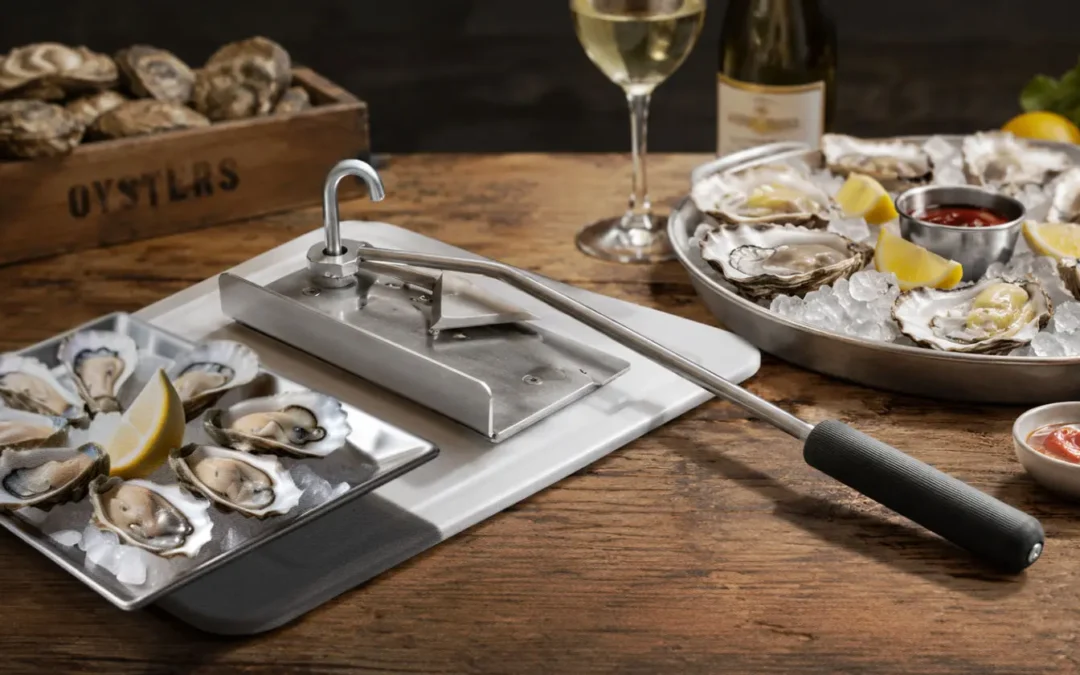
Instead of balancing an uneven shell in your hand while trying to work a knife into the hinge, the oyster is held securely in place and the pressure is applied in a controlled direction. That changes the process completely. You’re no longer adjusting your grip every few seconds or fighting to find the right angle on every shell. The motion becomes repeatable, which means the experience becomes calmer and far more predictable.
For people who regularly open oysters at home, that consistency matters more than they usually expect.
Where the Traditional Knife Method Starts to Break Down
There’s no denying that a skilled person with an oyster knife can work quickly. But that skill comes from repetition, and most home cooks simply don’t open enough oysters to develop that kind of feel.
That’s where frustration creeps in. One oyster opens cleanly, the next feels welded shut, and suddenly you’re pushing harder, repositioning the towel, trying another angle, and compensating in real time for a shell that keeps changing shape in your hand.
That’s also where injuries happen. Not because people are reckless, but because the process becomes reactive. At home, oyster nights are rarely happening in a quiet, focused workspace. There’s conversation, movement, maybe a drink involved, and attention gets divided quickly. A setup that depends heavily on precision and grip suddenly becomes a lot less forgiving in that environment.
Why Mechanical Oyster Shuckers Work Better at Home
Most people who switch to a mechanical oyster shucker aren’t trying to look professional. They just want the process to stop feeling awkward.
That usually comes down to a few simple things:
- Less strain on the hands and wrists
- More consistent results from oyster to oyster
- A setup that feels safer and more controlled
That last point is the big one. When the oyster is secured and your hands aren’t directly in the path of the blade, the entire experience changes psychologically. You stop hesitating. You stop second-guessing stubborn shells. Instead of fighting your way through the process, you settle into it.
People who entertain regularly tend to appreciate these tools quickly because once you’re opening a few dozen oysters for guests, efficiency and consistency suddenly matter a lot more than tradition. And there’s no worry that a friend or acquaintance may injure themselves with a knife.
Are Mechanical Oyster Shuckers Worth the Money?
Honestly, that depends on how you use oysters at home.
If you buy oysters once a year for a special occasion, a knife may be perfectly fine if you’re careful, patient and experienced. But if oysters are something you genuinely enjoy — if you host, entertain, cook seafood regularly, or simply appreciate tools that make a process smoother and faster — then a mechanical shucker starts to feel a lot more reasonable.
At that point, you’re not really paying for the ability to open oysters. You’re paying for a faster, easier and safer way that adds to the experience, not take away from it.
Over time, those things tend to matter more than the initial cost because they enhance the experience itself.
 Where the Aw Shucks Oyster Shucker Fits In
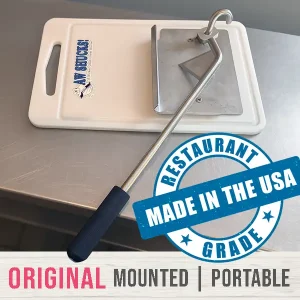
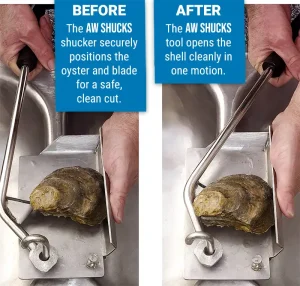
The Aw Shucks oyster shucker was designed to make oyster prep feel as controlled and repeatable at home as it is in a busy restaurant.
Not complicated. Not over-engineered. Just stable, durable, and designed to remove as many unpredictable variables as possible from the process. For some people, that difference feels noticeable immediately, especially after dealing with a few stubborn oysters and realizing they’re spending more time managing the setup than actually enjoying the experience.
For people who entertain regularly or open oysters often, the answer to whether mechanical oyster shuckers are worth it becomes pretty obvious after a few uses.
Final Thought
Mechanical oyster shuckers are not magic, and they’re not necessary for everyone. But they do solve a very real problem.
Opening oysters with a knife depends heavily on grip, angle, pressure, and repetition. When any of those variables start to shift — especially at home — the process becomes unpredictable very quickly. A controlled setup changes that.
For a lot of people, once oyster shucking stops feeling tense and inconsistent, it becomes something they actually look forward to doing.